
The deadly return of South African Xenophobic attacks on African immigrants forces Nigerians to flee the country for safety
David Oladimeji
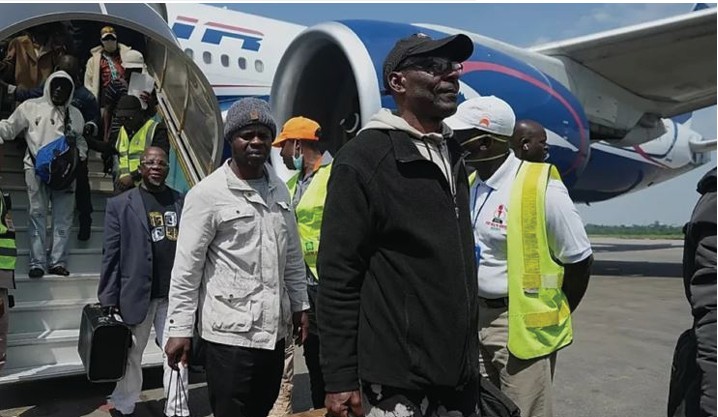
On Wednesday, June 10, 2026, the Minister of State for Foreign Affairs, Ambassador Sola Enikanolaiye, received 268 Nigerians evacuated from South Africa, following recent xenophobic attacks in the country.
In a statement signed by spokesperson of the Ministry of Foreign Affairs, Kimiebi Imomotimi Ebienfa, on Tuesday, June 9, the minister would represent the Federal Government in receiving the returnees at the Murtala Muhammed International Airport, Lagos.
The statement said the Acting High Commissioner of Nigeria in Pretoria, Ambassador Alexander Ajayi, will escort the first batch of 268 passengers to Nigeria and formally hand them over to the minister.

According to the ministry, the Air Peace evacuation flight was expected to arrive in Lagos at about 5:00 a.m. Today.
The ministry also disclosed that the ongoing screening for Nigerians willing to voluntarily return home due to the xenophobic attacks had been extended to Sunday, June 14, 2026, to accommodate more affected persons.
It stated that the extension reflected the federal government’s commitment to the welfare and protection of Nigerians abroad.
The ministry further assured that relevant Ministries, Departments and Agencies (MDAs), had put in place adequate reception, documentation and support arrangements for the returnees upon their arrival.
The promise of a united Africa has once again collided with a painful reality. Reports of fresh xenophobic attacks in South Africa, which allegedly claimed the lives of two Nigerians and triggered evacuation requests from more than 1,000 others, have reopened wounds many believed should have healed long ago.
For decades, South Africa has stood as a symbol of resilience, having emerged from the dark shadows of apartheid to become one of Africa’s most influential democracies. Yet, recurring attacks on foreign nationals of African origin continue to cast a troubling shadow over that legacy.
The latest violence is not merely another security incident. It represents a deeper crisis of identity, economic frustration and social division that continues to challenge the ideals upon which modern South Africa was built.
Behind every statistic is a human story. The two Nigerians reportedly killed in the attacks were not numbers in a report. They were individuals with families, dreams, responsibilities and aspirations. Their deaths leave behind grieving relatives and communities searching for answers.
For thousands of Nigerians living in South Africa, the tragedy has transformed ordinary daily activities into exercises in caution and survival. Going to work, running a business or simply walking through a neighbourhood now carries a degree of uncertainty many never anticipated when they left home in search of opportunities.
The fear has become so intense that over 1,000 Nigerians have reportedly indicated their willingness to be evacuated. Such a development speaks volumes about the level of insecurity felt within affected communities.
What makes the situation particularly disturbing is that these incidents are not isolated occurrences. Xenophobic violence has surfaced repeatedly in South Africa over the years, often leaving behind a trail of destruction, loss and diplomatic tension.
Each outbreak followed a familiar pattern. Economic hardship increases. Unemployment rises. Public frustration grows. Foreign nationals become convenient targets for anger and blame. Violence follows, and afterward came the condemnations, promises and investigations.
Yet the cycle continues.
South Africa faces genuine socio-economic challenges. Millions struggle with unemployment, poverty and inequality. However, many analysts argue that blaming migrants for these problems oversimplifies complex structural issues that require broader policy solutions.
Foreign nationals, including Nigerians, often establish businesses, create jobs and contribute to local economic activity. Their presence is not solely a burden; in many cases, it serves as a source of economic vitality within struggling communities.
The persistence of xenophobic attacks therefore raises difficult questions about governance, social cohesion and public leadership. Why do these incidents continue to occur despite years of warnings, policy discussions and security interventions?
Critics of Xenophobia have argued that authorities have frequently responded after violence erupted rather than addressing the underlying factors that fuel hostility toward migrants. Without sustained preventive measures, each new outbreak becomes almost predictable.
The implications extend beyond South Africa’s borders. For example, analysts argued that every attack on foreign Africans weakens the vision of continental integration championed by leaders across the continent. They stressed that such attacks undermine efforts to promote free movement, economic cooperation and regional solidarity.
For Nigeria, the situation presents both a humanitarian and diplomatic challenge. Opinion leaders insist that the government must not only ensure the safety of its citizens, but must also seek accountability for lives lost and properties destroyed.
Diplomatic relations between Nigeria and South Africa have often weathered storms generated by xenophobic violence. Both nations remain strategic partners and major economic powers on the continent, making every recurrence of such incidents particularly sensitive.
Human rights advocates insist that stronger legal action is necessary. They argue that perpetrators of xenophobic violence must face swift prosecution to send a clear message that attacks based on nationality will not be tolerated.
Beyond law enforcement, there is a growing call for educational and community programmes aimed at promoting tolerance, diversity and peaceful coexistence. Experts believe that combating xenophobia requires changing attitudes as much as enforcing laws.
Meanwhile, the psychological impact on migrant communities cannot be ignored. Fear, anxiety and uncertainty often linger long after physical attacks end. Many victims carry emotional scars that affect their ability to rebuild their lives.
The growing number of Nigerians seeking evacuation highlights a tragic irony. Individuals who crossed borders in pursuit of a better future are now contemplating a return home not because their dreams have been fulfilled, but because their safety can no longer be guaranteed.
As Africa continues its march toward greater integration, the latest attacks serve as a painful reminder that economic cooperation alone cannot build unity. Genuine continental solidarity must be reflected in how Africans treat one another regardless of nationality, language or origin.
The deaths of two Nigerians and the fear driving hundreds more toward evacuation should not become another fleeting headline. They should serve as a wake-up call for governments, civil society and citizens across Africa to confront xenophobia before it claims more lives and further damages the dream of a truly united continent.