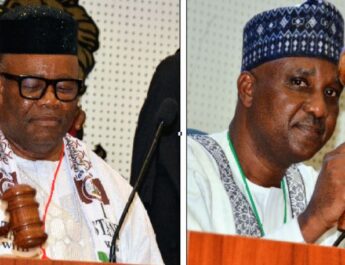

State Legislatures Plot State Police Frustration
Despite President Bola Tinubu’s last minute desperate moves to consummate the implementation of the contentious State Police before the 2027 general election, amid mounting opposition to the policy, there are indications that many states’ Legislatures are still foot dragging in lending their support, fueling the suspicion that they may have decided to frustrate the implementation
By Udoka Ekeleme, Abuja
Once again, the contentious State Police implementation matter has surfaced, with the presidency assuring that the National Policing Bill was ready to be transmitted to the National Assembly.
The Presidential Working Group said on Thursday October 15, 2026, that it would transmit the National Policing Bill to the National Assembly within two weeks.
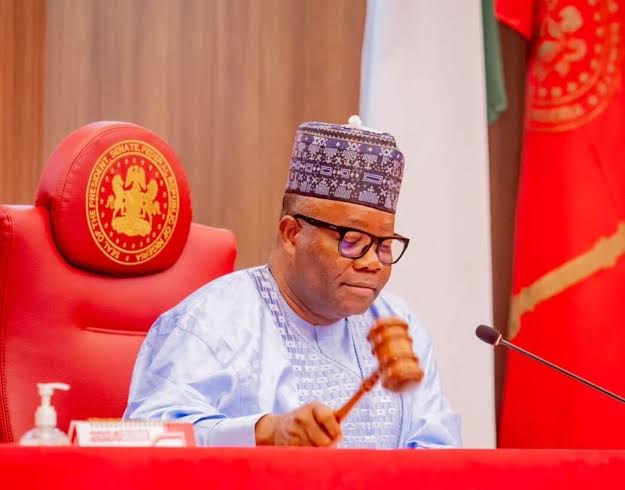
Chief of Staff to the President and Chairman of the Working Group, Rt. Hon. Femi Gbajabiamila, stated this while speaking to the media after the steering committee meeting at the State House in Abuja.
Gbajabiamila: “The National Policing Bill is more or less ready for transmission to the National Assembly. We will probably have one more meeting after this to cross the t’s and dot the i’s and make sure every area is covered. So, we are 90 per cent ready. The governors have one or two observations, and we should be ready in about a week or so.”
Gbajabiamilla described the bill as ‘the most consequential Bill of the administration so far’. He said it has undergone strenuous exercises in the last few weeks since the working group’s steering committee began deliberations on August 3.
Also speaking on the possibility of the states dragging their feet on the passage of the Sixth Constitution Alteration Bill (State Police), especially against the backdrop of the information that only about six states had passed the amendment out of the 36 states and the FCT, Gbajabiamila affirmed that there was a “national consensus” among Nigerians on the need for the amendments.
“I see no reason why anyone will want to have a rethink on it,” he said.
Those who attended the steering committee’s meeting included the Chairman of the Governors’ Forum and Governor of Kwara State, AbdulRazak AbdulRahman, Governor Dapo Abiodun of Ogun State, Governor Uba Sani of Kaduna State, Inspector General of Police (IGP), Tunji Disu, and the Attorney General and Minister of Justice represented by the Solicitor General and Permanent Secretary, Federal Ministry of Justice, Mrs Beatrice Jedy-Agba.
Other members of the committee were Chairman, Policy Advisory Committee, Justice Abdullahi Liman (rtd); Head, Nigeria Police Reform Secretariat, Professor Olu Ogunsakin; Special Adviser to the President on National Assembly Matters (House of Representatives), Dr Lanre Smart; Senior Special Assistant to the President on Planning and Research who also doubles as the Secretary of the Committee, Nnadubem Moghalu; representative of the President of the Nigerian Bar Association; and AIG Abraham Nabhon Thomas, representing the National Security Adviser, among others.
While Gbajabiamila and his team swim in the euphoria of optimism, facts on ground indicates that all is not well with the State Police Bill at the state’s level.
The push for the implementation of the state police, widely canvassed as a response to Nigeria’s worsening security challenges, is facing a fresh hurdle at the state Houses of Assembly, with only four states -Edo, Osun, Oyo and Rivers having so far approved the proposed constitutional amendment.
Under Section 9 of the 1999 Constitution, alteration of the Constitution requires approval by at least two-thirds of the 36 state Houses of Assembly, 24 legislatures, before the amendment can proceed to the next stage.
With only four states having approved the proposal so far, the measure still requires the support of 20 more Houses of Assembly to meet the constitutional threshold.
But the slow pace of consideration, coupled with claims by some assemblies that they have not received the bill, has thrown up questions over the readiness of the state legislatures to meet the National Assembly’s administrative timeline.