It is another season of court-ordered forfeitures of property and monies running into several trillions of Naira from those who should have been the managers of the nation’s treasury, including former Attorney-General of the Federation and Minister of Justice, Abubakar Malami, former Governor of the Central Bank of Nigeria (CBN), Godwin Emefiele, business tycoon Aisha Achimugu and Retired Major General Emmanuel Atewe, but it only remains to be seen if the forfeited property and monies will not be looted again by their custodians
By Edu Abade
In the last couple of weeks, the media has been awash with news of court-ordered forfeitures of property and monies acquired by high profile government officials through illegitimate means. The lists of such property and monies are mind-blowing, as they run into several trillions of Naria in what analysts described as mindless thievery and plunder of Nigeria’s commonwealth, some of them by people entrusted with custody of the nation’s treasury and resources.
As of the time of filing this report, the Economic and Financial Crimes Commission (EFCC) had secured conviction and forfeiture of a whopping 48 properties linked to former Attorney General of the Federation and Minister of Justice under the late Muhammdu Buhari administration, Abubakar Malami and the immediate past Governor of the Central Bank of Nigeria (CBN), Godwin Emefiele, from whom seven landed properties alongside over $2 million and share certificates were confiscated.
A Federal Capital Territory High Court in Apo District of, Abuja, on Thursday, July 16, 2026 ordered the forfeiture of assets worth about N8.9 billion linked to a businesswoman, Aisha Achimugu to the Federal Government, while the Court of Appeal in Lagos affirmed the final forfeiture of N293.97 million, several properties and investment assets linked to a retired major-general, Emmanuel Atewe, to the Federal Government, just as the Federal High Court in Abuja ordered the final forfeiture of ₦942 million recovered from 909 bank accounts linked to a payroll fraud uncovered under the Integrated Personnel and Payroll Information System (IPPIS).

In specific terms, besides the properties, the cash recovered and forfeited to the Federal Government in the last two weeks alone amounts to over N13 billion and there are indications that more forfeitures would be made in the coming days.
Nigerians have expressed concern that as these sleaze and huge hemorrhage go on, they wallow in abject poverty and economic hardship, prompting further fears that the property and monies being recovered and forfeited to government would end up being re-looted by their custodians.
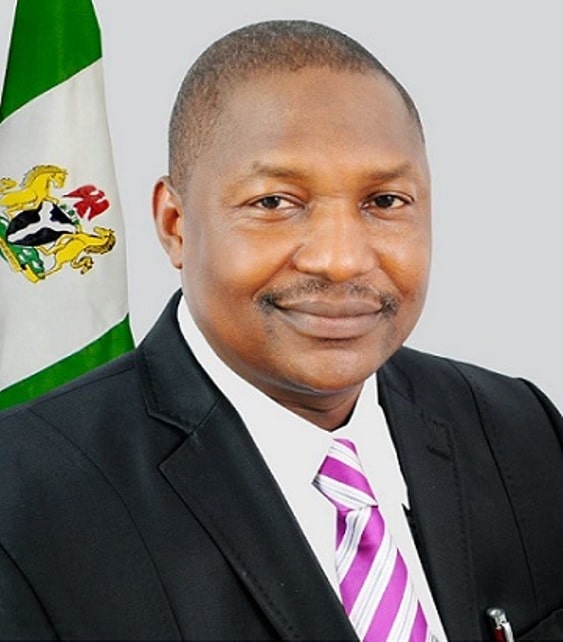
Abubakar Malami’s Properties
As the EFCC secured the final forfeiture of 48 properties linked to Malami, it explained in a statement that order was granted on Wednesday by Justice Joyce Abdulmalik of the Federal High Court in Abuja, who ruled that the EFCC had established that the assets were reasonably suspected to be proceeds of unlawful activities and were not acquired from legitimate sources of income.
The forfeited assets include Rayhaan University in Kebbi State, including its permanent, temporary and third campuses, the Vice Chancellor’s residence and Rayhaan Radio located along the Sani Abacha Bypass in Birnin Kebbi.
Others are several luxury buildings and hotels in Abuja, Kano and Kebbi States, including Meethaq Hotels in Jabi and Maitama, Harmonia Hotels in Garki, commercial plazas, residential estates, warehouses, filling stations and extensive parcels of land.
The court also ordered the forfeiture of Rayhaan Agro Allied Factory in Kebbi State, including its buildings, machinery, staff quarters, mosque and plant units. Assets at Azbir Arena, including Azbir Hotel, Printing Press, Gallery, Gardens, Mosque, Azbir Clothing, and Azbir Pharmacy and Supermarket, were equally forfeited.
Additional assets affected by the order include the Al-Afiya Energy tanker garage, Rayhaan Security House, an unfinished two-storey plaza in Birnin Kebbi, Amasdul Oil and Gas filling station structure, as well as Zeennoor Hotel, Zeennoor Mosque and the old Zeennoor Hotel building in Kano.
The case commenced on January 6, 2026, when Justice Emeka Nwite granted an interim forfeiture order following an ex parte application filed by EFCC counsel, Ekele Iheanacho (SAN).
Following the order, the EFCC published notices in national newspapers inviting interested parties to show cause why the assets should not be permanently forfeited to the Federal Government.
Malami and 14 other respondents, comprising his family members and associates, subsequently challenged the interim forfeiture, questioned the court’s jurisdiction and urged it to reject EFCC’s request for permanent forfeiture.
After hearing arguments on May 27, 2026, Justice Abdulmalik reserved judgment before delivering her ruling on Wednesday. In her ruling, the court held that EFCC had sufficiently established that the 48 properties were reasonably suspected to have been acquired with proceeds of unlawful activities and that the respondents failed to prove otherwise.
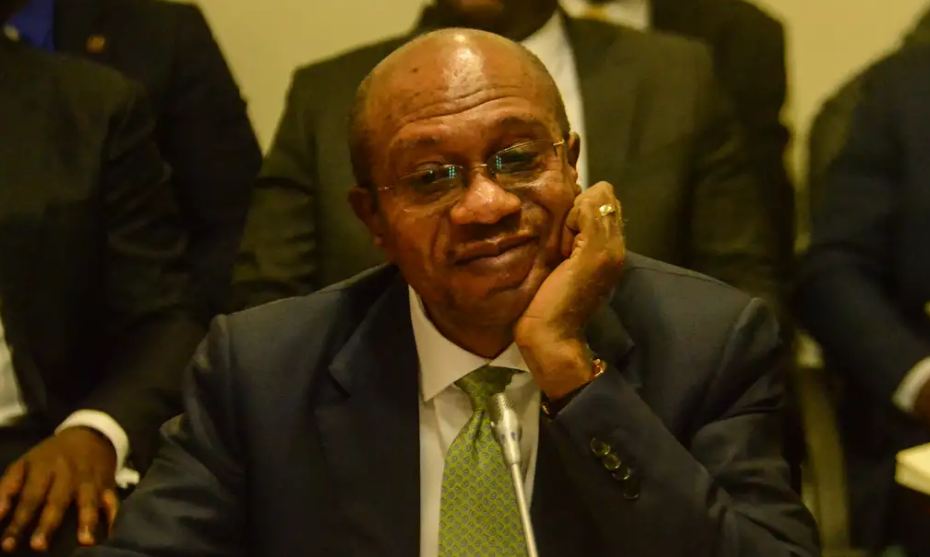
Godwin Emefiele’s Properties And Cash
On Emefiele, the Supreme Court, on Friday, July 17, 2026, affirmed the permanent forfeiture of seven landed properties alongside over $2 million and share certificates linked to the Federal government.
In a unanimous decision delivered by a five-member panel, the Supreme Court set aside the judgement of the Court of Appeal in Lagos, which lifted the forfeiture order on the assets.
The Federal High Court, Lagos, had ordered the final forfeiture of the assets because they were reasonably suspected to have been acquired with proceeds of unlawful activities.
Following the final forfeiture order made by the Federal High Court, Emefiele challenged the decision before the Court of Appeal, which reversed the judgement of the trial court.
Displeased with the appellate court’s decision, EFCC approached the Supreme Court, which restored and affirmed the judgement of the Federal High Court.
The Supreme Court panel led by Justice Ibrahim Saulawa, held that the Federal High Court, Lagos, was right to order the permanent forfeiture of the assets on the grounds that they were reasonably suspected to have been acquired with proceeds of unlawful activities. It thereby set aside the Court of Appeal’s decision lifting the final forfeiture order.
The Supreme Court’s decision comes about 19 months after the Federal High Court in Abuja ordered the final forfeiture of a vast estate comprising 753 housing units in Abuja recovered from Emefiele. EFCC has handed over the estate to the federal government for public use.
Based on the Supreme Court verdict, the assets forfeited by Emfeile are: A fully detached duplex of identical structures situated at No. 17B Hakeem Odumosu Street, Lekki Phase 1, Lagos, an undeveloped parcel of land measuring 1,919.592 square metres, covered by Survey Plan No. DS/LS/340, situated at Oyinkan Abayomi Drive (formerly Queens Drive), Ikoyi, Lagos, a bungalow situated at No. 65A Oyinkan Abayomi Drive (formerly Queens Drive), Ikoyi, Lagos and a four-bedroom duplex on 12A Probyn Road, Ikoyi, Lagos.
The former CBN boss also forfeited an industrial complex under construction on 22 plots of land in Agbor, Delta State; eight units of undetached apartments on a plot measuring 2,457.60 square metres on No. 8A Adekunle Lawal Road, Ikoyi, Lagos, a full duplex together with all its appurtenances on a plot measuring 2,217.87 square metres on 2A Bank Road, Ikoyi, Lagos, $2,045,000 and share certificates of Queensdorf Global Fund Limited.
Justice Deinde Dipeolu of the Federal High Court, Lagos granted the final forfeiture order, which was originally granted on 1 November 2024 following an application by Director, Public Prosecution, Rotimi Oyedepo, a Senior Advocate of Nigeria (SAN).
He brought the application in the suit marked FHC/L/MISC/500/24 under section 17 of the Advance Fee Fraud and Other Fraud Related Offences Act, 2006, and Section 44(2)(b) of the Nigerian constitution. It sought the final forfeiture of properties reasonably suspected to have been acquired with the proceeds of unlawful activities.
The application for the forfeiture was supported by an affidavit sworn by David Jayeoba, an investigating officer with the EFCC, who shared details of investigative findings on the assets.
Jayeoba said investigations revealed that the assets were reasonably suspected to have been acquired with proceeds of unlawful activities.
The EFCC urged the court to grant the final forfeiture under the provisions of Section 17 of the Advance Fee Fraud and Other Fraud Related Offences Act, 2006, contending that the assets were liable to forfeiture because they were reasonably suspected to have been acquired through unlawful means.
Aisha Achimugu’s N8.9b Jewellery, Cars
In another shocking case of mindless acquisition of property, a Federal Capital Territory High Court in Apo, Abuja, on Thursday, July 16, 2026 ordered the final forfeiture of assets worth about N8.9 billion linked to businesswoman Aisha Achimugu to the Federal Government.
Justice Jude Onwuegbuzie made the order while delivering judgment on an application filed by the Economic and Financial Crimes Commission. The forfeited assets comprise jewellery valued at a whopping N4.65 billion, 11 exotic vehicles worth N4.29 billion, $50,000 (an equivalent of N70 million) and N30 million in cash.
In the judgment, Justice Onwuegbuzie held that Achimugu failed to disprove the evidence presented by the EFCC and failed to discharge the burden of proof that the assets were acquired through lawful activities.
The court consequently granted the commission’s application and ordered the final forfeiture of the jewelery, vehicles and cash to the Federal Government.
The judgment followed proceedings that commenced after the EFCC secured an interim order of forfeiture from the court on April 23, 2026, under Section 17 of the Advance Fee Fraud and Other Related Offences Act.
EFCC lead counsel, Ekele Iheanacho (SAN), had urged the court to order the interim forfeiture of the assets and directed that the order be published in national dailies to allow any interested person or persons to show cause within 14 days why the properties should not be permanently forfeited.
Following the publication, the EFCC filed its application for final forfeiture, but Achimugu’s legal team filed affidavits to show cause why the assets should not be forfeited and also sought an order setting aside the interim forfeiture.
The EFCC opposed the applications with a counter-affidavit. After hearing arguments from both sides, the court reserved judgment until Thursday.
According to the EFCC, investigations into Achimugu commenced after it received financial intelligence indicating huge inflows and outflows running into billions of naira and millions of dollars through more than 136 bank accounts linked to her.
The anti-graft agency alleged that the investigation revealed that funds passing through companies operated by Achimugu were not declared as revenue in the financial statements the companies filed with the Federal Inland Revenue Service (FIRS).
The commission further stated that searches conducted at Achimugu’s residence led to the recovery of the jewellery, exotic vehicles and cash eventually forfeited by the court.
It added that although Achimugu completed an assets declaration form during interrogation, she allegedly failed to declare the recovered assets as belonging to her.
The EFCC maintained that its investigation showed that the funds traced to accounts linked to the businesswoman were not derived from legitimate business activities and that the recovered assets were proceeds of unlawful activities.
IPPIS N942M Ghost Payroll Fraud
Again, on Wednesday, July 22, 2026, Nigeria’s anti-corruption war recorded a major victory as the Federal High Court in Abuja ordered the final forfeiture of ₦941,994,079.86 recovered from 909 bank accounts linked to a monumental payroll fraud uncovered under the Integrated Personnel and Payroll Information System (IPPIS).
The recovered funds, traced to accounts in banks, were forfeited to the Federal Government following an application by the Independent Corrupt Practices and Other Related Offences Commission (ICPC).
A Certified True Copy of the judgment delivered by Justice Binta Fatima Nyako on Monday, July 13, 2026, showed that the court permanently vested the funds in the Federal Republic of Nigeria after finding them to be reasonably suspected proceeds of unlawful activities.
The forfeiture order marks one of the largest recoveries arising from the ICPC’s ongoing crackdown on payroll fraud and ghost worker schemes in Nigeria’s public service.
“That an Order is hereby made for the Final Forfeiture to the Federal Republic of Nigeria the Sum of ₦941,994,079.86 seized during investigation into IPPIS Payroll scam in the year 2024,” Justice Nyako ruled.
The order, subsequently signed and issued under the seal of the court by the Registrar, Gideon Waya, followed a Motion on Notice filed by the ICPC on March 26, 2026, in Suit No. FHC/ABJ/CS/156/2026.
The ICPC’s application, filed through its counsel, Fatima Abdullahi Bendi, was supported by an affidavit deposed to by Idris Abubakar, an official of the anti-graft agency, detailing investigations that uncovered suspicious payroll-related transactions across hundreds of bank accounts.
Court documents further revealed that the 909 respondents held accounts in Access Bank, Ecobank, FCMB, Fidelity Bank, First Bank, GTBank, Jaiz Bank, Keystone Bank, NPF Microfinance Bank, Polaris Bank, Stanbic IBTC, Sterling Bank, Union Bank, Unity Bank, UBA, Wema Bank and Zenith Bank.
The first respondent listed in the court documents is Arilewola Olusanya Matthew, an account holder with Access Bank.
Investigators uncovered a complex web of transactions involving multiple accounts operated by some of the respondents across different banks-a pattern commonly associated with the layering and movement of illicit funds to conceal their origin.
The documents further showed that the respondents comprised individuals from diverse professional backgrounds, including persons bearing titles such as “Dr.” and “Mrs.”, while some of the accounts were domiciled with NPF Microfinance Bank, suggesting that the investigation extended to personnel connected with the security sector.
The IPPIS was introduced by the Federal Government as a flagship reform initiative aimed at centralising salary payments across Ministries, Departments and Agencies (MDAs), eliminating ghost workers and plugging leakages in the public payroll system.
Ironically, investigators discovered that the same platform designed to curb fraud had allegedly been exploited through sophisticated schemes involving payroll manipulation, ghost worker arrangements and unlawful salary payments.
According to the court documents, the funds were initially preserved in the ICPC Recovery Account pending judicial determination after investigators established reasonable grounds to suspect that they constituted proceeds of unlawful activities.
Justice Nyako’s judgment contained two principal orders: the final forfeiture of the entire ₦941.99 million recovered during the investigation and the permanent vesting of the funds already domiciled in the ICPC Recovery Account in the Federal Republic of Nigeria.
Although the Commission had yet to issue an official public statement on the judgment as of press time, court documents confirm that the recovery process has been concluded, with the ₦941,994,079.86 now formally forfeited to the Federal Government.
General Emmanuel Atewe N293.9m Properties
In another landmark ruling, the Court of Appeal affirmed the final forfeiture of N293.97 million, properties and investment assets linked to a retired major-general, Emmanuel Atewe, to the federal government. The forfeiture order based on the Economic and Financial Crimes Commission’s (EFCC) investigation linked the assets to funds allegedly diverted from money released for the operations of the Joint Task Force (JTF), Operation Pulo Shield.
In a unanimous judgement delivered on Wednesday, July 22, 2026, Justice Boloukuromo Ugo, dismissed Atewe’s appeal against the judgement of the Federal High Court in Lagos, which had ordered the final forfeiture of the assets following an application by the Economic and Financial Crimes Commission (EFCC).
The appellate court upheld the judgement of a trial judge Chukwujekwu Aneke, holding that the appeal lacked merit. The assets include N293.97 million, 30,000 MTN-linked units in Stanbic IBTC Asset Management Limited and several properties in Abuja and Bayelsa State.
They include plots of land along the Outer Northern Expressway, Jahi, Sabon Lugbe, Kuje, Gaube Farmland Extension II Layout and Sector Centre B Layout in Abuja and a commercial property in Yenagoa, Bayelsa State.
The EFCC stated that its investigation linked the assets to funds allegedly diverted from money released for the operations of the Joint Task Force, Operation Pulo Shield. The commission alleged that about N8.537 billion released to the task force was diverted through a network of companies and individuals acting as proxies.
The EFCC revealed that billions of naira were transferred to companies for services that were not provided, while portions of the funds were later used to acquire assets allegedly linked to Atewe through companies associated with him.
The case formed part of a wider fraud investigation involving the alleged diversion of funds meant for Operation Pulo Shield, just as the investigation also led to the prosecution of former Director-General of the Nigerian Maritime Administration and Safety Agency (NIMASA), Patrick Akpobolokemi and others.
The EFCC specifically noted that N297 million traced to Cisco Nobots Limited was used in a property transaction in Port Harcourt, Rivers State, from which N290 million was later recovered by the commission.
The Federal High Court initially granted an interim forfeiture order over the assets. It later made the order final after finding that Atewe had failed to satisfactorily explain their legitimate source, a decision Atewe challenged at the Court of Appeal.
He argued, among other things, that the forfeiture proceedings were incompetent because he was entitled to the protection provided under Section 123 of the Armed Forces Act and that the proceedings should not have commenced while criminal charges against him were pending and that the Federal High Court lacked jurisdiction to entertain the EFCC’s application, prayers the Court of Appeal rejected.
On the protection under Section 123 of the Armed Forces Act, the court held that the provision did not apply to Atewe because he was a retired military officer when the forfeiture proceedings were instituted.
The court noted that Atewe had admitted his retirement in an affidavit filed before the court and held that the statutory protection applied only to serving members of the Armed Forces.
The appellate court also held that Atewe failed to sufficiently demonstrate how he legitimately acquired the assets, maintaining that his explanations, which referred to honoraria, did not establish a lawful source for the assets. The Court of Appeal consequently dismissed the appeal and affirmed the lower court’s order for the final forfeiture of the assets to the Federal Government.
But while the recoveries and forfeiture of property and monies remain commendable, Nigerians have expressed doubt that billions of dollars and Naira earlier recovered from some public officials, dead or alive have not benefited the country and the common man in any meaningful way as most of such funds and properties ended being re-looted.