
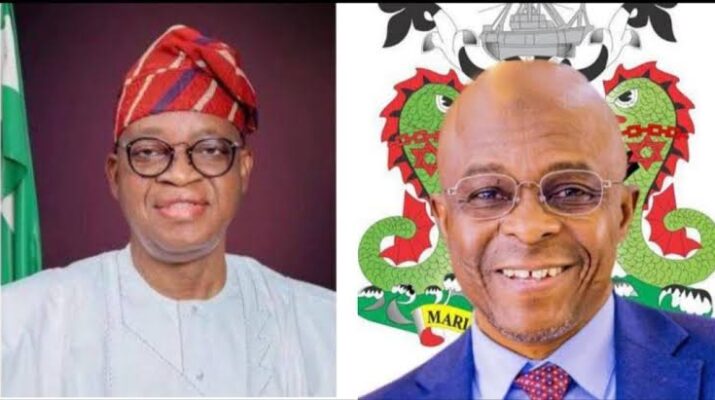
The league of maritime editors holds its Annual General Meeting (AGN) in Lagos, elects new executives to run its affairs
By Innocent Chukwu
The Nigerian Ports Authority (NPA) has unveiled an ambitious port modernisation agenda aimed at transforming Nigeria into West Africa’s leading maritime hub, with a target of handling more than five million twenty-foot equivalent units of containers annually by 2030.
The Managing Director of the NPA, Dr Abubakar Dantsoho, disclosed this while delivering a presentation titled, “Port Modernisation: Its Impact in the Maritime Industry,” at the League of Maritime Editors’ Annual General Meeting (AGM) and Conference in Lagos on Thursday, August 20, 2026.
Dantsoho said the modernisation programme was designed to address longstanding infrastructure, operational and technological challenges confronting Nigerian ports, stressing that the transformation of the sector was no longer optional if the country must maximise its strategic position in global trade.
According to him, Nigerian ports handle more than 80 per cent of the country’s international trade, making their efficiency critical to the wider economy. He said total cargo throughput rose to 129.3 million metric tonnes in 2025, representing a 24.8 per cent increase, while container throughput reached 2.1 million TEUs.

The NPA boss said the Federal Government’s $1bn port modernisation programme would focus on the reconstruction of ageing infrastructure at the Lagos and Tin Can Island ports, alongside rehabilitation of Eastern ports.
He explained that the Apapa and Tin Can Island ports would undergo major reconstruction, including berth and quay-wall rehabilitation, dredging to a depth of 16.5 metres and yard modernisation. The Tin Can Island reconstruction is projected to run for about 48 months, with completion expected around 2030.
Dantsoho also identified digital transformation as a major pillar of the reform programme, citing the National Single Window, Port Community System, Eto electronic truck call-up system and Vessel Traffic Management System as initiatives designed to reduce delays and improve efficiency.
He said the ultimate objective was to reduce cargo clearance and dwell time dramatically, with the NPA targeting a reduction from the current 18–21 days to as little as one business day for clearance and not more than five days as part of its broader 2030 vision.
The NPA boss said the impact of the reforms was already becoming visible, pointing to the World Bank’s Container Port Performance Index 2025, which ranked Tin Can Island Port and Apapa among the world’s top 20 most improved container ports.
Tin Can Island Port was ranked 10th among the most improved ports, while Lagos Port Complex, Apapa, placed 12th. Dantsoho attributed the improvement to measures including electronic truck management, faster vessel turnaround, digital cargo tracking and equipment upgrades.
He further highlighted the performance of Lekki Deep Sea Port as evidence that public-private partnerships and modern technology could transform Nigeria’s maritime sector. The port, he said, had recorded significant growth in throughput and accounted for 40.6 per cent of national cargo in the third quarter of 2025.

According to the presentation, the modernisation drive is expected to stimulate trade, increase government revenue and create employment across the maritime value chain. The NPA projected revenue of ₦1.489tn for 2026, compared with ₦894.86bn recorded in 2024.
The NPA boss said the reforms would also strengthen Nigeria’s position as a regional transshipment centre, noting that transshipment container traffic recorded significant growth in 2024 and 2025. He said improved port efficiency could help redirect cargo currently routed through competing regional ports.
On sustainability, Dantsoho said the NPA was aligning its modernisation programme with the International Maritime Organisation’s 2050 decarbonisation objectives. He listed shore power, electric or hybrid cargo-handling equipment, renewable energy and climate-resilient infrastructure among the initiatives being considered.
Looking ahead, the NPA projected that Nigeria could achieve more than five million TEUs in national container throughput by 2030, while reducing cargo dwell time to five days or less and strengthening the country’s position as an AfCFTA trade gateway.
The authority’s roadmap includes the continued expansion of Lekki Deep Sea Port, reconstruction of Apapa and Tin Can, development of other deep-sea port projects, Eastern port rehabilitation and stronger rail-port integration. By 2030 and beyond, the NPA envisages a network of modern ports capable of competing with leading maritime gateways across Africa.
Dantsoho said the objective was ultimately to reposition Nigeria’s ports from ageing cargo gateways into modern economic infrastructure capable of supporting industrialisation, trade expansion, employment and national economic growth. He maintained that with sustained investment, digitalisation and institutional reforms, Nigeria could reclaim its position as the dominant maritime and trade hub in West Africa.
At the event, the League called for deliberate policy measures to address the imbalance in cargo traffic between Nigeria’s western and eastern seaports. It said a more equitable distribution of vessel and cargo calls would strengthen the national economy and unlock the vast potential of the marine and blue economy.
The call was made by the outgoing President of the group, Mrs Remi Itie, during her welcome address during the maritime editors’ Conference. The theme of the Conference was “Lagos, Eastern Ports: How to Reverse Existing Imbalance in Disproportionate Cargo Calls,”
According to Itie, the conference was convened as part of the League’s contribution to nation-building through agenda-setting for policymakers, public enlightenment and constructive engagement on critical issues affecting Nigeria’s maritime sector and wider economy.
She stressed that the objective was not to undermine any individual, institution or government agency, but to identify gaps in the nation’s port system, highlight opportunities and share ideas capable of advancing national development.
The League leader said the imbalance in cargo distribution remained one of the critical issues requiring urgent attention, particularly given the enormous economic potential of Nigeria’s eastern ports and coastal communities.
While acknowledging the comparative advantages and significant contributions of the western ports to national revenue and economic activities, Itie urged the Federal Government and other stakeholders to formulate and implement policies that would attract greater cargo traffic to the eastern ports.
According to her, a more balanced port system would stimulate economic activities in the eastern region, create employment and investment opportunities, reduce pressure on the western ports and spread the benefits of maritime commerce more evenly across the country.
The League also called on the Ministry of Marine and Blue Economy to intensify efforts to map Nigeria’s coastal areas and develop viable maritime infrastructure around locations with the potential to support new and existing seaports.
Beyond port development, the League said Nigeria’s coastal waterways offered enormous opportunities in tourism, agriculture, fisheries and other blue-economy activities that remained largely untapped.
The association cited the Ethiope River in Delta State, which runs from the Abraka axis through Eku and Sapele and beyond, as an example of the economic possibilities embedded in Nigeria’s inland and coastal waterways.
The League noted that similar opportunities existed in Bayelsa and other coastal states, stressing that strategic investments in infrastructure, tourism, fisheries and water-based industries could significantly broaden Nigeria’s economic base.
The maritime journalists also raised concerns over pollution and poor waste management along Nigeria’s coastal corridors and territorial waters.
The League urged relevant authorities to intensify measures to curb pollution, warning that continued degradation of marine and freshwater ecosystems could have far-reaching consequences for aquatic life, coastal communities and the national economy.
It warned that contamination of waterways could affect the quality and availability of fish and other marine products consumed by Nigerians, with potential consequences for public health, food security and the livelihoods of fishing communities.
It further noted that marine pollution could undermine Nigeria’s competitiveness in the international market for fisheries and other marine products, thereby limiting the country’s export potential.
Against this backdrop, the Conference was to examine practical measures for tackling pollution in Nigeria’s territorial waters, strengthening security across the port system, addressing the imbalance in vessel calls and resolving other challenges confronting the maritime sector.
The League also expressed interest in position papers expected from agencies under the Ministry of Marine and Blue Economy, including the Nigeria Customs Service, saying the perspectives of the agencies would enrich discussions and help produce practical recommendations.
The League also maintained that the responsibility for national development rests collectively on government, the private sector, professionals and citizens, stressing that Nigeria possesses the natural and human resources required to transform its economic fortunes.
It recalled that Nigeria once stood alongside several emerging Asian economies that later became known as the “Asian Tigers,” expressing optimism that the country could reclaim a leading position through sound policies, strategic investment and effective utilisation of its resources.
The League therefore called for stronger collaboration among government agencies, policymakers, private-sector operators and maritime professionals to unlock the country’s maritime potential.
It said developing a more balanced, competitive and sustainable port system would not only strengthen Nigeria’s maritime economy but also support broader economic growth and ensure that the benefits of the blue economy are distributed more widely across the country.