Buoyed by hardship and dwindling economic fortunes, Nigerians express misgivings about President Bola Ahmed Tinubu’s borrowing spree amid concerns that the government continues to borrow recklessly while the citizens dive deeper into abject poverty and economic strangulation, even as the borrowed funds have not been used for commensurate infrastructure development prompting the African Democratic Congress to accuse the presidency of running a ‘Ponzi Economy’
By Edu Abade
To date, the figures are mind boggling! Worrisome! Embarrassing! Undefendable! And President Bola Ahmed Tinubu says Nigerians should expect more borrowings with over $11.6 billion (an equivalent of N16.24 trillion) or nearly half of its 2026 revenue projections for debt servicing.
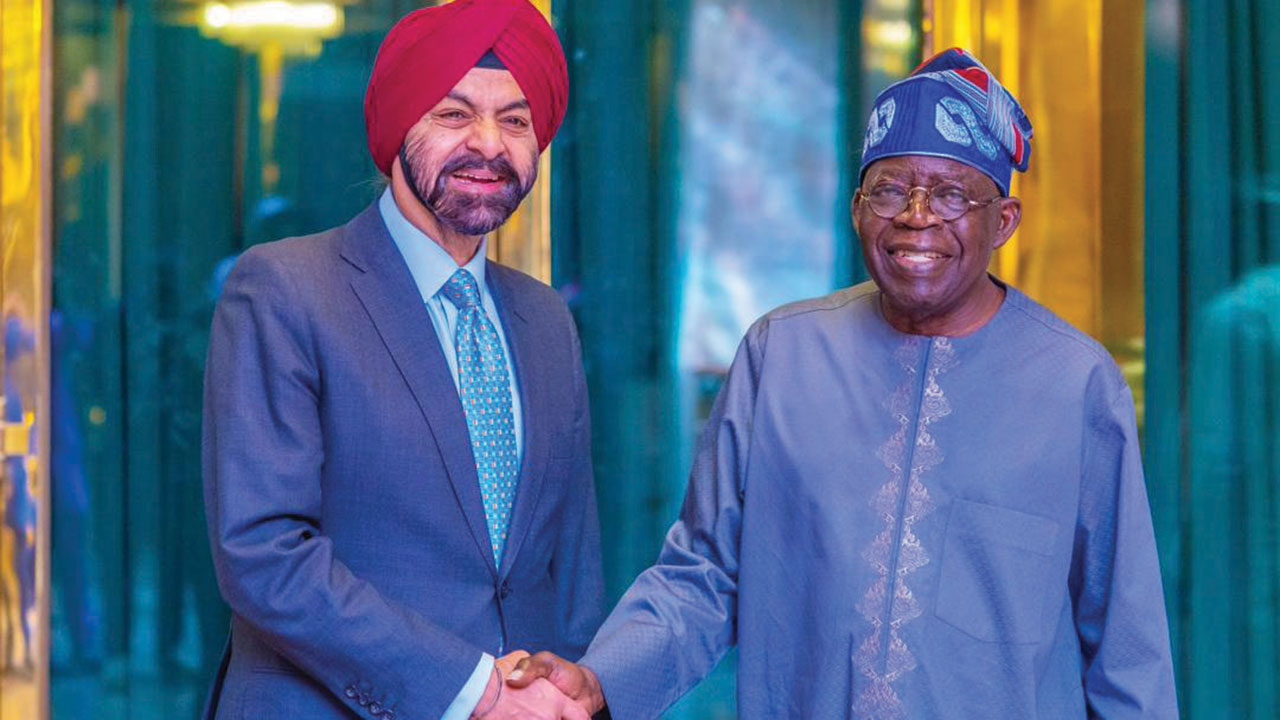
Details of the figures the Tinubu administration has borrowed so far reveal a troubling trend. In 2023, Nigeria borrowed $2.7 billion from the World Bank; he took $750 million for renewable energy expansion and another $700 million for adolescent girls’ secondary education.
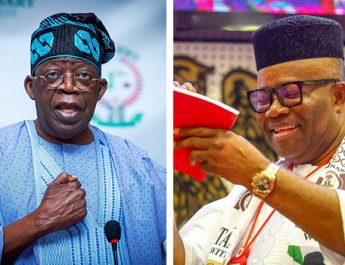
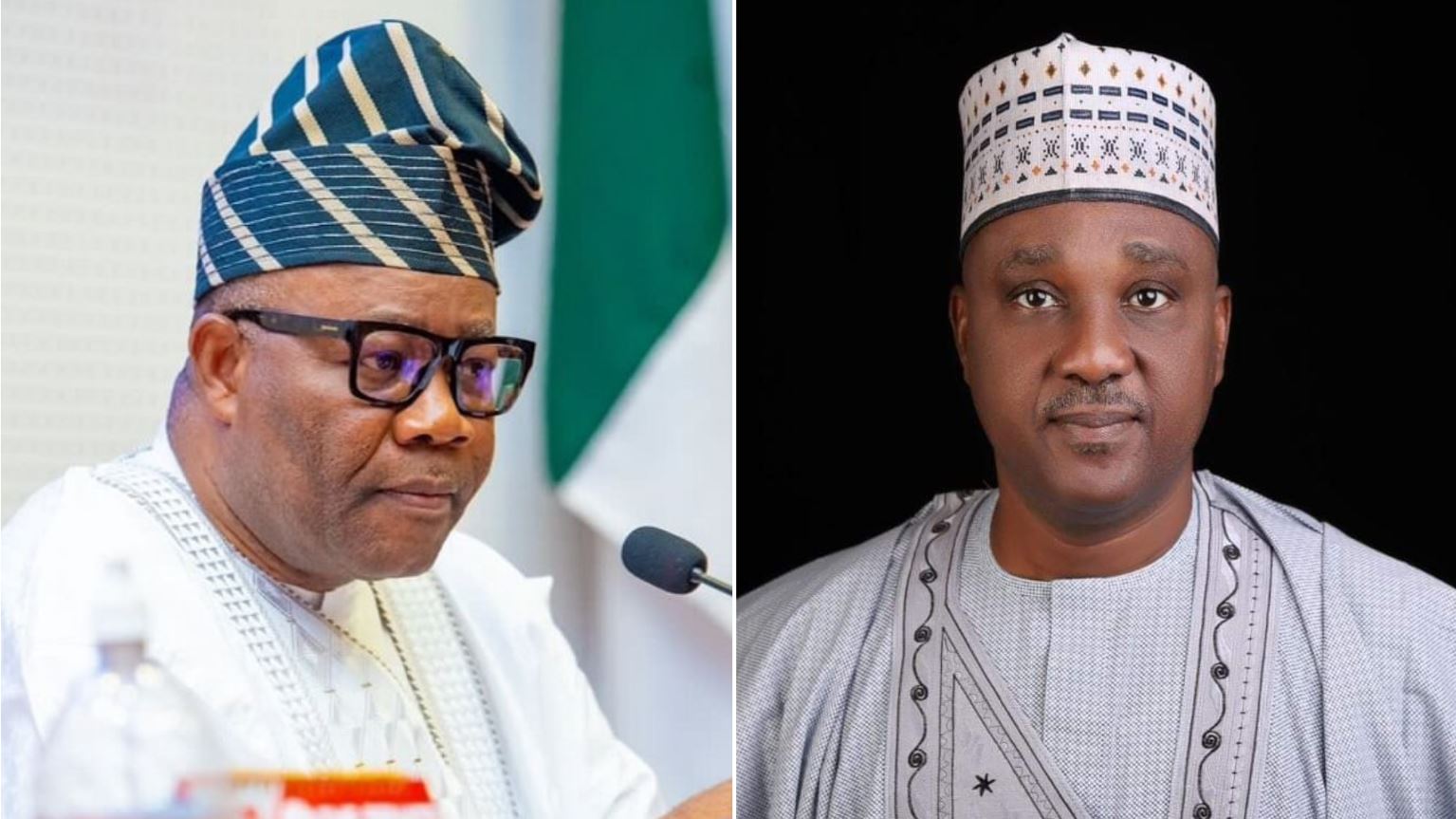
Not done, with the express support and approvals of President of the Nigerian Senate, Godswill Akpabio, the President went for another $500 million (or N700 billion) for a Nigerian Women programme and yet another $750 million for what was termed power sector recovery.
In 2024, Nigeria borrowed another $4.25 billion from the World Bank, $1.57 billion to strengthen human capital, improve health for women and children and build climate resilience, another $357 million, $57 million and $86 million for rural road access and agricultural marketing projects.
As the government explained then, the monies went into economic stabilization, resource mobilization reform, primary healthcare and dam safety.
In 2025, Nigeria again borrowed another $2.695 billion from the World Bank, $500 million for education under the HOPE Education loan and $80 million for nutrition programmes plus another $253 million and $247 million for NG-CARES.
The rest of the borrowed funds, Nigerians were told, went to broadband expansion, health security, livelihoods for vulnerable households and financing of Micro, Small and Medium Enterprises (MSMEs).
As of today, Nigeria’s total indebtedness to the World Bank’s under Tinubu is about $9.65 billion or a whopping N13.51 trillion and still counting.
Nigeria is now the largest IDA borrower in Africa and the third largest in the entire world with the World Bank alone accounting for 41.3 percent of Nigeria’s total external debt stock.
Other external loans include a $500 million in June 2023 for a women’s programme, $800 million in June 2023 to “cushion the effects” of the fuel subsidy removal, $1.5 billion in June 2024 for the Economic Stabilization Act and $500 million from the African Development Bank for energy and electricity reform.
There are also $1 billion from UK Export Finance via Citibank London for Lagos Port rehabilitation, $902 million more from the United Kingdom (UK) Export Finance, $5 billion from First Abu Dhabi Bank to finance deficits, $400 million from the African Development Bank for agriculture and digital economy and yet another $2.3 billion approved by the National Assembly in 2025 to fund budget deficit.
Between April 28, 2026 and April 29, 2026, the government went for another $516 million from Deutsche Bank for the Sokoto-Badagry Super Highway.
The Federal Government’s domestic borrowings amounted to N22.7 trillion in Central Bank of Nigeria (CBN) Ways and Means advances securitized in 2023 alone, a N9.62 trillion borrowing plan in 2023, with N5.05 trillion raised mid-year, N7.81 trillion in bonds and treasury bills in 2024, N8.54 trillion in bonds and treasury bills in 2025 and another N10.07 trillion projected for 2026.
There are also N1.15 trillion for budget deficit financing, N757 billion bond to clear outstanding pension liabilities and another fresh N1.15 trillion domestic loan request submitted to the Senate in late 2025.
Other expected borrowings are a $21.5 billion external borrowing plan from 2025 to 2026, already approved by the Senate covering infrastructure, agriculture, health, education, water, security and employment and $2 billion domestic foreign currency bond programme approved alongside the above.
Taken together at this level Nigeria’s total public debt will rise from N159 trillion to over N183 trillion, but looking back, Nigeria’s total public debt has gone from N87 trillion when Buhari left in 2023 to N159 trillion as of December 2025, amounting to a whopping additional N72 trillion in less than three years.
External debt servicing alone cost Nigeria $9.9 billion between June 2023 and August 2025. In 2023, debt servicing cost N7.8 trillion, a 121 percent increase from the previous year, a figure that rose to N13.12 trillion or 68 percent increase.
Experts have expressed concerns that over 80 percent of government revenue currently goes to debt servicing, as against building schools, fixing hospitals and other critical infrastructure and other areas of national concern.
The government’s borrowing spree is getting out of hand and are beginning to ask questions one of which is: What are the ambiguous reasons the government has been borrowing to fund? Is to fund Tinubu’s reelection in 2027? Are there other secret loans being taken that Nigerians are not aware of? Can’t the National Assembly stand down some of the loan requests? Who understands or who can better explain what the borrowings actually mean?
Responding to the development late last year, former Labour Party (LP) presidential flagbearer in the 2023 general election, Peter Obi, criticized the Federal Government over its plans to borrow ₦17.89 trillion to finance the 2026 budget.
In a post he shared on his official X account, Obi lamented that the FG is planning to take another loan amid high debt servicing costs nearing half of projected revenues.
He also questioned the unspent 2025 funds despite reported revenue surges, with official documents confirming ₦17.89 trillion in planned 2026 borrowing, a 72 percent increase from 2025, while 70 percent of the 2025 capital projects remain unimplemented due to revenue shortfalls.
“Today, Nigerians woke up again to the troubling news that the Federal Government is planning to borrow about ₦20 trillion in new loans to finance the 2026 budget,” he said.
“This is at a time when debt servicing alone is projected to gulp nearly half of our national revenue, and when our borrowing requirement has surged by over 72 percent.
“At a time when Nigerians are struggling under unprecedented hardship, insecurity, and unemployment, we must ask the most important and logical questions: Where is the revenue from 2025?
“How can we be discussing trillions in new borrowing for 2026 when we are still implementing the 2024 budget? One is genuinely worried. This suggests, very clearly, that the 2025 budget is still untouched and unimplemented. So, where are all the revenues that accrued in 2025, even when we were told that we had surpassed the revenue targets since August?”
Speaking further, Obi said it is time for the government to stop what he described as “fiscal rascality,” especially with uncontrolled and unexplained borrowing that is not being invested in the productive sectors of the nation, but instead ends up in consumption.
Critics have decried the Federal Government’s failures, amplifying calls for production-focused policies over debt, as non-oil revenues hit ₦20.59 trillion from January to August 2025, yet the FG failed to curb borrowing needs.
The Breton Woods Institution, the World Bank that keeps doling out loans to the Nigerian government seems to have restricted comments on its Instagram page following a wave of reactions from Nigerians opposing plans by the Federal Government to secure a fresh $1.25bn loan facility for President Tinubu.
The backlash comes after reports that the Federal Government is in advanced discussions with the World Bank on a proposed facility to support economic reforms, electricity expansion, digital infrastructure, agriculture and job-creation initiatives.
The proposed loan, with the title: Nigeria Actions for Investment and Jobs Acceleration, is expected to be presented for approval on June 26, 2026, about six months and 21 days before the January 16, 2027, presidential election, according to the revised timetable of the Independent National Electoral Commission (INEC).
If approved, the loan will rank as the second-largest single World Bank facility secured under Tinubu, behind only the $1.5bn Reforms for Economic Stabilization to Enable Transformation Development Policy Financing approved in June 2024.
At an exchange rate of N1,361.4 to the dollar, the proposed $1.25bn facility translates to about N1.70tn, highlighting the scale of external financing being pursued by the Federal Government amid ongoing economic reforms.
Most Nigerians had flooded the World Bank’s social media platforms with messages urging the institution to halt further lending to Nigeria, citing concerns over the country’s rising debt profile and worsening economic hardship.
It was also observed that the World Bank’s Instagram page recorded a surge in engagement following online discussions surrounding the proposed loan request.
However, further checks showed that the restriction appeared to be device-specific, as the comment option was unavailable when accessed through some iPhone devices but remained visible when the page was checked using an Android phone.
Also reacting to the fresh loan request, the African Democratic Congress (ADC) accused the President Tinubu administration of running what it described as a ‘Ponzi economy’ after the Federal Government moved to secure another $1.25 billion World Bank loan despite Nigeria’s growing public indebtedness estimated at over N159.28 trillion.
The opposition party said the fresh loan request has further fueled concerns over the country’s rising debt exposure at a time millions of Nigerians are struggling with soaring food prices, inflation, unemployment, business failures and worsening living conditions, nearly two years after the government introduced sweeping economic reforms.
ADC’s National Publicity Secretary, Bolaji Abdullahi, in a statement, said the government had continued to borrow heavily without visible improvements in the lives of ordinary citizens.
In his words, “This is why the ADC says the Tinubu administration is running a Ponzi economy, where new loans are constantly being taken to service old debts and cover fiscal failures, while ordinary Nigerians are left to carry the burden.
“At this point, Nigerians must ask a simple question: If this government keeps borrowing trillions of naira every few months, why are Nigerians getting poorer, and why is life getting harder for the majority?”
The party expressed concern that Nigeria’s rising debt profile has failed to produce noticeable improvements in critical sectors or ease the economic pressure facing households and businesses across the country.
It said: “Today, Nigeria’s total public debt has risen to over N159.28 trillion, yet food prices continue to rise daily, electricity tariffs are increasing, the naira remains weak, businesses are shutting down, insecurity is spreading, and millions of young Nigerians remain unemployed.
“Families are cutting down on meals, manufacturers are struggling to survive, and small businesses are collapsing under the weight of inflation and poor economic conditions.”
The ADC also raised concerns over the Federal Government’s projected debt servicing obligations for 2026, warning that resources needed for development could be swallowed by loan repayments.
Abdullahi said: “It is noteworthy that President Tinubu himself has declared that Nigeria will spend about $11.6 billion, over N15 trillion, on debt servicing alone in 2026.
“In simple terms, trillions of naira that should have gone into roads, hospitals, schools, electricity, security, agriculture and job creation will instead go into paying creditors and servicing old loans.
“One may want to ask how the government of the day keeps borrowing when the Nigeria Customs Service (NCS), the Nigeria Revenue Service (NRS), the Nigerian Ports Authority (NPA) and other revenue generating agents of government keeps declaring revenues in import and export duties and other sundry taxes running into trillions and remitting same to government coffers. That remains inexplicable,” Job Ojikwo, who spoke to Tentacle, said.