
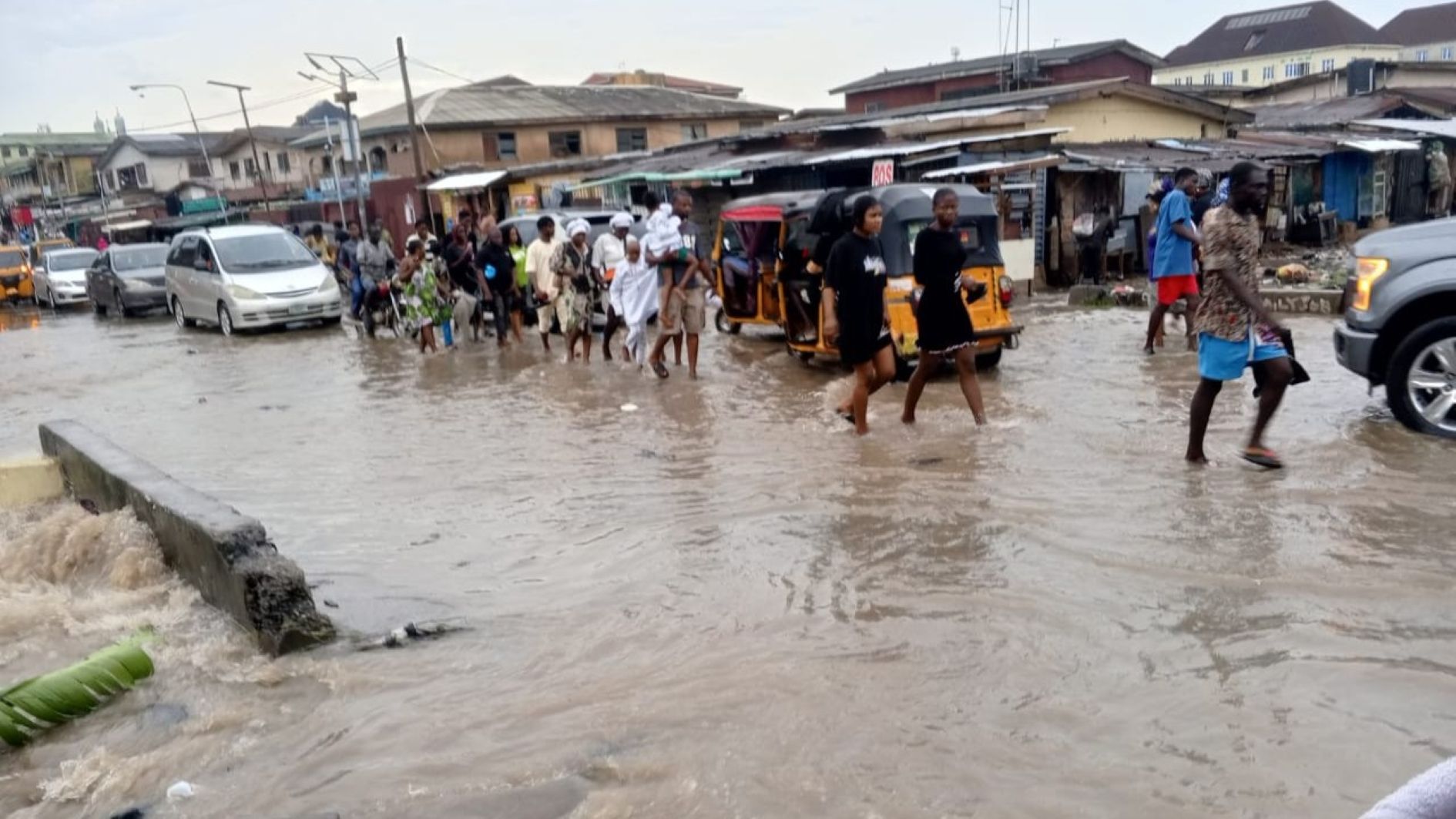
David Oladimeji takes a closer look at the flooding of some of Nigerian states due to heavy downpour
Floods rarely begin with destruction. They start as warnings — rising water levels, changing weather patterns, overflowing rivers and communities hoping that the coming rains will be different. But when preparation falls behind nature’s force, the consequences can be devastating.
Nigeria is once again facing a serious environmental challenge as the Director-General of the Nigeria Hydrological Services Agency, Umar Mohammed, raised concerns over the possible scale of flooding that could affect communities, infrastructure and livelihoods across the country.
The warning goes beyond temporary flooding of roads and homes. It presents a disturbing picture of potential damage to agriculture, education, healthcare and the economic stability of millions of Nigerians who live and work in vulnerable areas.
According to the projection from the hydrological agency, about 2,000 hectares of land could be washed away by floodwaters. For farmers and rural communities, the threat represents more than environmental damage; it is a danger to food production, income and survival.
The impact could also be felt in the education sector, as the agency warned that about 8,700 educational institutions may be submerged if effective preventive measures are not taken. Such a development could disrupt learning and affect thousands of pupils and students.
Schools are not just physical structures; they represent hope, opportunity and the future of young Nigerians. When floodwaters enter classrooms, the consequences extend beyond damaged buildings to interrupted dreams and lost learning opportunities.
The healthcare system is also facing a potential setback, with about 3,800 health facilities projected to be at risk of being submerged. In communities where access to healthcare is already challenging, flooding could create additional pressure on medical services.
The warning from the hydrological agency is further supported by projections from the Nigerian Meteorological Agency (NiMet), which has consistently highlighted the possibility of extreme weather events and increased flood risks during the rainy season.
NiMet has urged relevant authorities, emergency management agencies, farmers and residents to take early preventive measures, stressing the importance of weather information in planning, disaster preparedness and protecting lives and property.
The combined warnings from both agencies reveal a growing reality: flooding is no longer just a seasonal inconvenience but a national challenge requiring strategic planning and urgent action.
Nigeria’s previous experiences with severe flooding have shown the devastating impact on communities, including displacement of residents, destruction of homes, damage to infrastructure and disruption of economic activities.
Yet, the repeated nature of these disasters raises questions about whether enough lessons have been learned and whether preventive measures are being implemented early enough.
Experts have identified several factors worsening flood risks, including poor drainage systems, unregulated urban development, construction on waterways, inadequate flood control infrastructure and the effects of climate change.
The challenge facing Nigeria is not only how to respond when floodwaters arrive but how to prevent avoidable losses before disasters occur. Preparedness, experts say, must become the centre of national flood management.
The possible loss of thousands of hectares of farmland could have wider economic consequences by threatening food supply and increasing pressure on agricultural communities already facing multiple challenges.
Similarly, the possibility of thousands of schools and healthcare facilities being affected highlights the need for stronger infrastructure planning, especially in flood-prone regions.
Governments at federal, state and local levels must strengthen collaboration, improve drainage networks, enforce environmental regulations and ensure that early warning information reaches communities on time.
Citizens also have an important role in reducing flood risks by keeping drainage channels clear, avoiding activities that block waterways and supporting community preparedness initiatives.
The projected flood threat is not simply a story about water; it is a story about people, livelihoods and the resilience of communities. Behind every affected farm, school or hospital is a human experience waiting to be protected.
As climate patterns continue to change, Nigeria must move beyond emergency responses and embrace long-term solutions driven by science, planning and sustainable development.
The warnings from NIHSA and NiMet should serve as a national wake-up call. The battle against flooding will not be won when the waters arrive, but through the decisions, preparations and investments made before the first major rainfall.
For Nigeria, the choice is clear: prepare today or pay a heavier price tomorrow. The safety of farmlands, schools, hospitals and communities depends on the urgency of actions taken now.


