
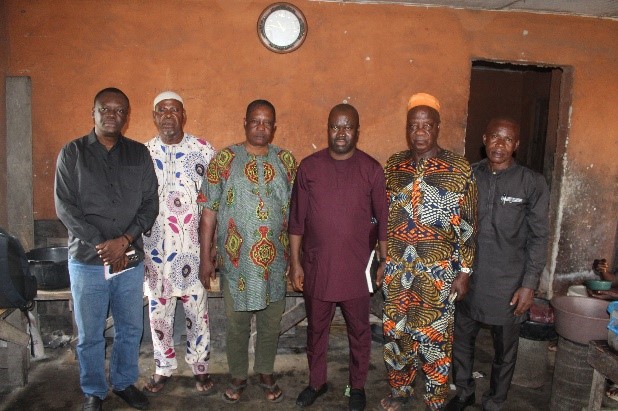
In spite of some interventions in the areas of scholarships for secondary school children, job slots for the youth, micro credits for women, provision of boreholes, and drugs for the Magbon-Segun Community Health Centre, residents of the 15 host communities of the Dangote Refinery and Petrochemical Company demand more intervention in repair of access roads and electricity as they have suffered outage for almost 15 years, among other demands
By Edu Abade
In reaction to the campaign to improve the living conditions of its host communities, the Dangote Refinery and Petrochemical Company may have finally heeded the call of environmentalists and civil society groups to provide succour to residents of the over 15 communities by drilling boreholes, providing scholarships and jobs for the indigent youths, drugs for health centres and modest interest-free micro credit scheme for women empowerment, among other benefits.
But like Oliver Twist who always asks for more, traditional rulers commonly called Baales in Yoruba parlance and the residents are demanding more interventions in the provision of access roads, as the communities remain inaccessible during the rains, viable jobs away from the casual employment being offered graduate indigenes, as well as provision of electricity to the communities, which have been cut off from power in the last 15 years.
It would be recalled that the $20 billion Dangote Petrochemicals and Refinery project is the largest pipeline infrastructure in the world spanning 1,100 kilometers in Ibeju Lekki area of Lagos. The refinery with a 4.74 billion litres storage capacity and handles 3 billion Standard Cubic Feet of gas per day, also boasts of a 435MW power plant.
The plan to establish the refinery was announced by Alhaji Aliko Dangote, Founder, Chairman, and Chief Executive Officer (CEO) of the Dangote Group in September 2013, though it was conceived in 2006.
The refinery sits on the coastal front of a vast 6,180 acres of land in Ibeju-Lekki, Lagos which was created out of the current Epe Local Government Area by Nigeria’s former military ruler, General Ibrahim Badamasi Babangida in 1990. Ibeju-Lekki is in the Lagos East Senatorial District, comprising Epe, Ikorodu, Kosofe and Somolu local government areas.
A clearly defined breakdown shows that the refinery produces an average of 50 million to 53.6 million litres daily, with a highest demonstrated supply capacity of up to 75 million litres. It also produces Automotive Gass Oil (AGO) or Diesel at an average of between 23.6 million and 25 million litres daily, and Aviation/Jet Fuel at an average of between 20 million and 22.9 million litres daily.
However, a prior visit to the area revealed that there was conflict between Ibeju Lekki communities and the Refinery
In 2025, the Environmental Defenders Network (EDEN) visited and engaged residents whose ancestral home is Ibeju Lekki within the perimeter of the refinery who had alleged that they were now sandwiched between the refinery, the Lagos Free Zone and the 90-hectare Lekki Deep Sea Port. They had complained that that the Dangote refinery with active backing of the Lagos State Government seized their community lands without adequately compensating them and decry the absence of social amenities.
They had told the EDEN team that only a handful of people in the community benefit from the company’s nominal Corporate Social Responsibility (CSR) programmes instead of agreed-upon developmental support embracing all the residents. They also claimed that a Memorandum of Understanding (MOU) signed with the management of Dangote Refinery had remained inaccessible to them despite repeated appeals for their copy of the document.
The residents complained that one the construction and operationalization of the refinery has caused disruption of the traditional livelihoods of the locals, especially fishing and farming as they started observing dead fish on their shores, which indicated that operations of the refinery were already affecting marine and aquatic life.
Another disturbing incident is that in the Dangote Refinery, community members alleged that even the graduates among them were being offered contract or menial jobs, and for the ladies, some unscrupulous staff members demand sex to secure jobs.
Another visit to the communities on Thursday, August 13, 2026 revealed that environmental impacts of activities from the refinery was already manifesting, as the locals believe that the project remains a major polluter of the environment, citing gas flares they now live with and its impact on the temperature in the communities.
They also claimed that that in the conduct of the statutory Environmental and Social Impact Assessment (ESIA) on the project they were largely novices, who did not understand the details or what they were signing, adding that influential members of the community in the Diaspora ensured that the details of the agreements remain unavailable and inaccessible for anyone to see. Most of the community leaders who confided in the EDEN team said they would only do so in anonymity for fear of sanctions by the state government, which is only interested in profits over untoward impacts.
One of the traditional rulers said, “Representatives of the state were there when the signing of the agreements took place. So also, were the lawyers and managers of the refinery, but the lawyer we had brought from Abuja to represent us was told to leave the room.”
They told Tentacle that several traditional rulers were invited and made to sign documents they did not understand and then they were paid only N1 million for surrendering hundreds of acres of ancestral land, lamenting that the overbearing posture of the state government hampered their ability to negotiate a fair deal with the refinery management as top government officials shut down any attempt to raise crucial issues.
To ensure enforced compliance, there are now regular patrol of police around the communities, just as this medium learnt that they disallow any form of unauthorized gathering and in the process violate the rights of locals to movement or peaceful assembly.
But on the whole, the Dangote Refinery has ensured that what used to be ‘deplorable conditions’ have changed for the better as revealed by a visit of the EDEN team to the Magbon-Segun Community on Thursday, August 13, 2026 and engaged the locals including the traditional chiefs on the current situation in the communities.
During a meeting with Chief Sikiru Adiju, the Baale of Oke Yanta, Chief Muftau Dada the chief Baale of Magbon-Segun and Chief Adeyemi the Baale of Oke-Segun, the team learnt that EDEN and other civil society groups advocacy after the last visit in 2025 had started paying off, as management of Dangote Refinery had changed its style of engaging with them. They revealed that the media publicity that attended the last visit compelled the company to visit them and promise to improve on their relationship.
Ever since, the company had provided their youths with jobs, supplied them company products including rice and other consumables on a regular and during festivities, and also extended a scholarship programme to all the school age children in secondary schools. They also said that plans to provide them electricity after 15 years of blackout was in the works.
In their testimonies, Chief Shakiru Adidju said, “After your last visit when we raised the alarm that we have been short-changed the Dangote management came to visit us and promised to improve in their support for us. They have started employing our children (though as contract staff) in the refinery and they are paid N70,000 (Seventy Thousand Naira) monthly. So, things are improving.
On his part, Baale of Magbon-Segun, Chief Muftau Dada, said, “We can now say we are getting tangible benefits from the Dangote Refinery, Periodically, they send us bags of rice or their products. In December they send us rice and during the Sallah celebrations they send us goats and rams. These were not happening before, but after we complained and through your instrumentality got the news to the media, the company urged us to never go to the press when we have complaints. Aside that, they used to discriminate in job offers, but now they are giving our children jobs.
Also speaking, Chief Adeyemi Subairu (note real names), said, “We are satisfied with the way the management of Dangote Refinery now carries out its responsibility towards us. The only outstanding thing that we are waiting for is electricity, but we were told that a construction work on the Eleko side of the expressway must be completed before they can lay polls.
In her intervention, one of the beneficiaries of the casual job offers, Jumoke Dosunmu, told the team that the refinery has started employing indigenes but “we would prefer that the employment is permanent, not on contract,” adding that the amount being paid should also be increased, because then N70,000 being paid now is just for survival.
The EDEN team observed that from the entrance into each of the communities visited, the lack of government presence is noticed. From the poor state of the roads to absence of drainages or functional hospitals, nothing gives a hint that the locals are hosts to the multimillion-dollar refinery, the Lekki Deep Sea Port and the Lagos Free Trade Zone, among other concerns of national interest. We learnt that whenever it rains, the roads are totally impassable due to flooding.
On the shoreline, heavy oil infrastructure was observed and a perimeter fence which the community people are forbidden from encroaching. We learnt that this fence and other infrastructure set up to guarantee smooth operation of the refinery has limited access to the sea which the locals rely on for their livelihoods.
Interaction with some of the fisherfolks revealed that they now go further into the sea before making catch. Beyond the minor changes the locals observed in the Dangote Refinery engagement with them since 2025, from the conversation with community folks, it is clear that while the traditional stools are happy with the periodic support they get, the youths are not happy with the temporal jobs and other “benefits” the company offers.
They particularly lamented that the jobs they are offered are contract jobs that could be terminated anytime without notice, just as EDEN also learnt that there is now a deep distrust (a divide and rule kind of tactics by the company) among the locals, who see some of their leaders as allies and others as traitors.
Having reviewed the development, EDEN, represented by its Executive Director, Barrister Chima Williams argued that while the Dangote Refinery has provided modest comfort for the communities and demanded that Lagos State and the Federal Government should review the existing MOU between the Dangote Refinery management and the Ibeju-Lekki community to ensure it addresses the genuine concerns of the communities.
In a document made available to Tentacle Magazine by the Programmes Director of EDEN, Philip Jakpor, the group also demanded that the Lagos State Government should ensure the Ibeju-Lekki community is provided basic amenities including electricity, water, and good roads to make life meaningful and enjoyable by the locals. The youths should also be provided meaningful employment.
“The Dangote Refinery should be compelled to make public the Environmental and Social Impact Assessment (ESIA) conducted before construction began on the refinery project. The Ibeju-Lekki community should by right be allowed to engage the services of human right lawyers in all their dealings with the Dangote refinery.
“Lagos government provide jobs or the enabling environment for job creation in the affected communities. While security personnel are welcome in the community to ensure their safety, the officers must be stopped from intimidating the locals or stopping them from exercising their rights to peaceful gathering to demand their rights are upheld,” it concluded.