
The planned expansion of the Lagos-Calabar Coastal Highway is set to unleash sorrow on the residents whose houses would be affected in the process
By David Oladimeji
The Lagos-Calabar Coastal Highway was introduced as a symbol of Nigeria’s infrastructure renaissance — a bold national project designed to connect coastal communities, unlock economic opportunities and redefine transportation along the nation’s shoreline. But beneath the excitement surrounding the multi-billion-naira project lies a growing cloud of anxiety, uncertainty and human cost.
For thousands of residents living along the highway corridor, the dream of a modern coastal route has gradually transformed into a nightmare of possible demolitions, displacement and fears over the future of their homes and businesses. What was announced as a road to prosperity is increasingly being described by affected communities as a road carrying the burden of pain and sorrow.
The latest controversy over the planned removal of structures within a 15-metre setback for service lanes has intensified concerns among property owners who now face the possibility of losing buildings, investments and sources of livelihood.
While the Federal Government insisted that the additional service lanes are essential for the long-term functionality and safety of the highway, many residents are asking difficult questions: Why were these requirements not fully addressed before construction began? Why must communities bear the consequences of planning decisions made after the project had already taken off?
The answers to these questions may determine whether the Lagos-Calabar Coastal Highway will be remembered as a landmark achievement or as another infrastructure project where communities paid the highest price for national ambition.
With estimates suggesting that between 1,700 and 2,700 buildings could be affected, the human impact goes beyond bricks and mortar. Behind every demolished structure are families, businesses, dreams and years of personal sacrifice that cannot easily be replaced by compensation. Environmental experts have also predicted that between 10,000 and 37,000 households may be affected by the dreaded demolitions.
For homeowners, the fear is not only about losing property but also losing stability. For business owners along the corridor, the threat extends to lost customers, reduced investments and uncertain economic prospects.
Infrastructure development is often associated with progress, but history has shown that progress without careful planning can leave behind communities carrying emotional and financial scars.
Experts in urban planning and engineering have questioned whether the service lanes were part of the original design or a later adjustment. If they were included from the beginning, critics argue that affected areas should have been properly identified and acquired before construction commenced.
However, if the expansion represents a design correction, questions remain over whether better planning could have prevented the current crisis.
The debate reflects a broader challenge facing Nigeria’s infrastructure development — the tension between ambitious national projects and the need to protect citizens whose communities sit in the path of transformation.
The Federal Government has defended the project, describing it as a historic investment that will improve transportation, promote tourism, expand trade and stimulate economic growth across Nigeria’s coastal states.
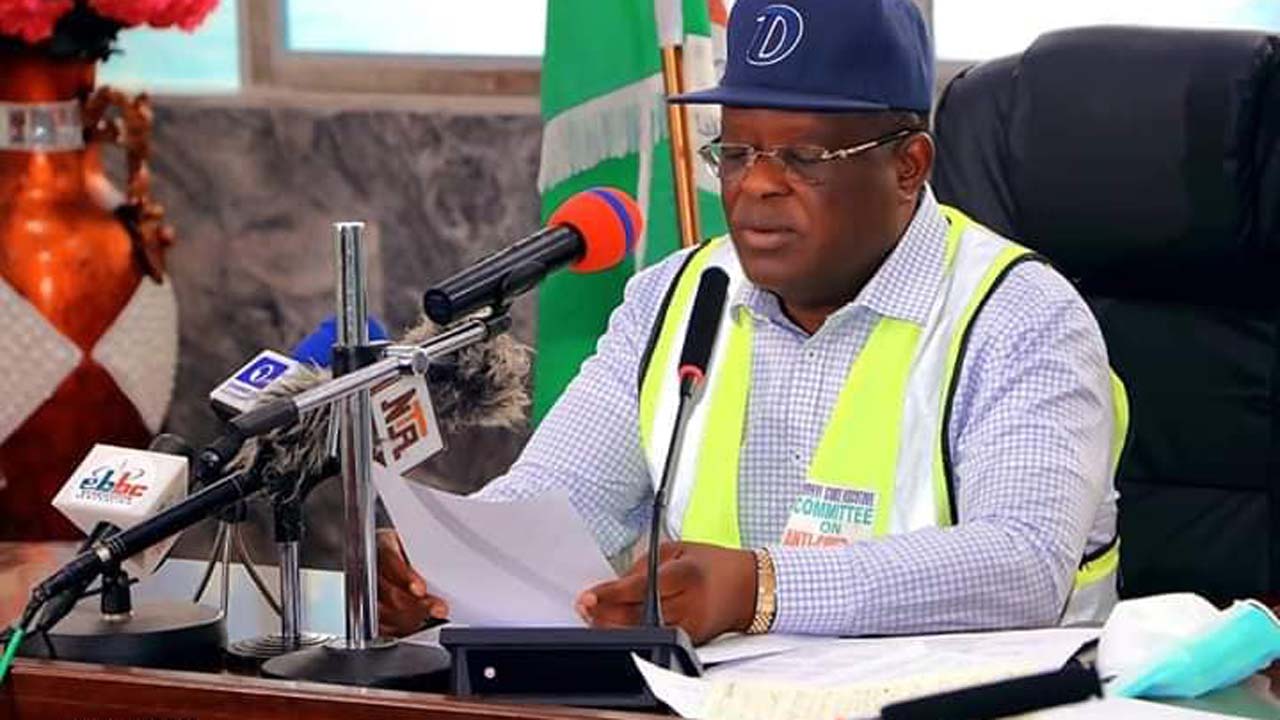
Minister of Works, David Umahi, has argued that the highway did not cause recent flooding in Lagos, attributing the problem instead to coastal geography, blocked drainage channels, poor waste disposal and developments in vulnerable areas.
Lagos State Governor Babajide Sanwo-Olu has also dismissed claims linking the highway to flooding, insisting that the state’s environmental challenges are connected to its unique coastal location and rapid urban growth.
But for residents facing possible displacement, the debate about flooding and engineering standards is only one part of a larger concern. Their immediate reality is the uncertainty of whether they will still have homes and businesses when the highway construction advances.
The controversy has exposed the difficult choices involved in transforming cities. Roads may create economic opportunities, but they also cut through human stories. Every metre of asphalt represents a decision that affects communities, livelihoods and generations.
A modern highway should not only measure success by kilometres completed, bridges constructed or vehicles transported. It should also be judged by how it treats the people who live along its path.
The Lagos-Calabar Coastal Highway has the potential to become a landmark achievement in Nigeria’s development story. But its legacy will depend on whether government can balance infrastructure ambition with compassion, transparency and justice.
For now, many residents watching the bulldozers approach see not just a road being built, but a painful reminder that national progress can sometimes arrive at the doorstep of ordinary citizens carrying the weight of sorrow.